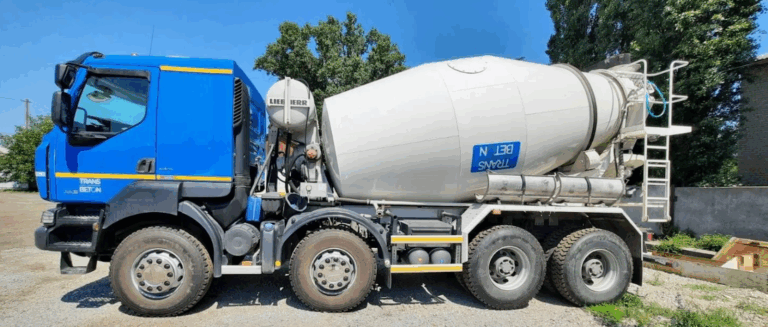
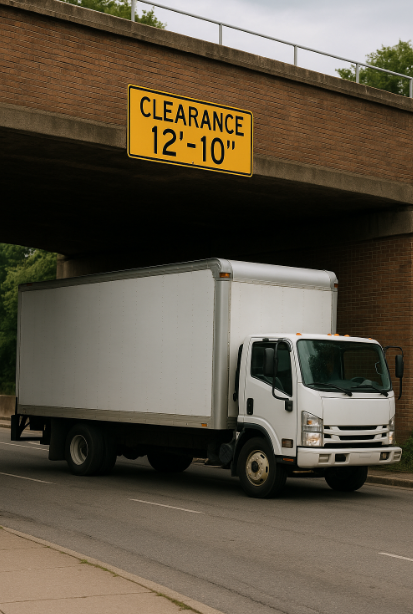
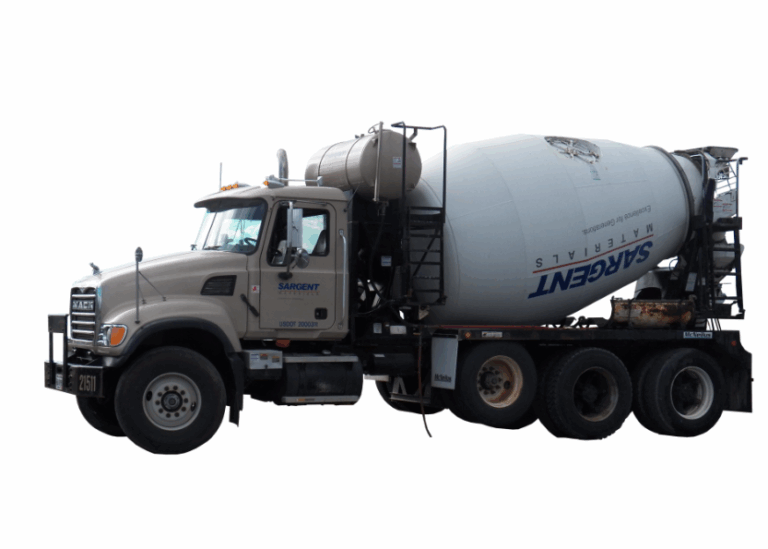
When you are in the initial stages of building or restructuring your home, the very first logical thing that comes to mind is a question: How Many Yards Can a Concrete Truck Hold? This piece of information aids in the planning of the concrete project, managing the costs, and helping to avoid unnecessary delays. The concrete truck types and designs vary from one model to the other, hence one must know the weight or capacity of the truck, realize the limitations, and match these to the project demands in the proper manner.
Standard Concrete Truck Capacities
The manufacturing specifications of concrete mixer trucks are mostly determined by the size and type of vehicle. The models that load the trucks with the largest and smallest concrete truck sizes are the best. The portable ones are built to take concrete mix from one construction site to another, ranging from small houses to big infrastructural projects.
Small Concrete Trucks
On average, this category of trucks carries 4–6 cubic yards. They are very useful in tiny areas such as driveways, small roads, public sidewalks, and patios next to residential homes. Compact concrete trucks are the best for this since they can navigate even the narrowest of streets, despite having a lesser truck payload limit and fewer yards per load compared to bigger vehicles.
Medium Concrete Trucks
Medium trucks are 7–9 cubic yards in capacity. These vehicles not only have a good cubic yard capacity but also enable ease of movement thus, they are ideal for medium-sized foundations, parking lots, and commercial slabs. Their load per trip and truck load factors allow efficiency without being oversized for delivery sites.
Large Concrete Trucks
Large trucks capacity is 10–12 cubic yards per load in some cases, it can be even more depending on the design. These types of vehicles are generally used in road construction, public commercial buildings, and big structures. Besides their higher concrete truck weight limits, they are also subjected to strict transport weight limits and concrete truck regulations. In addition to the high capacity, there are routes which may have capacity constraints due to the road size or weight restrictions.
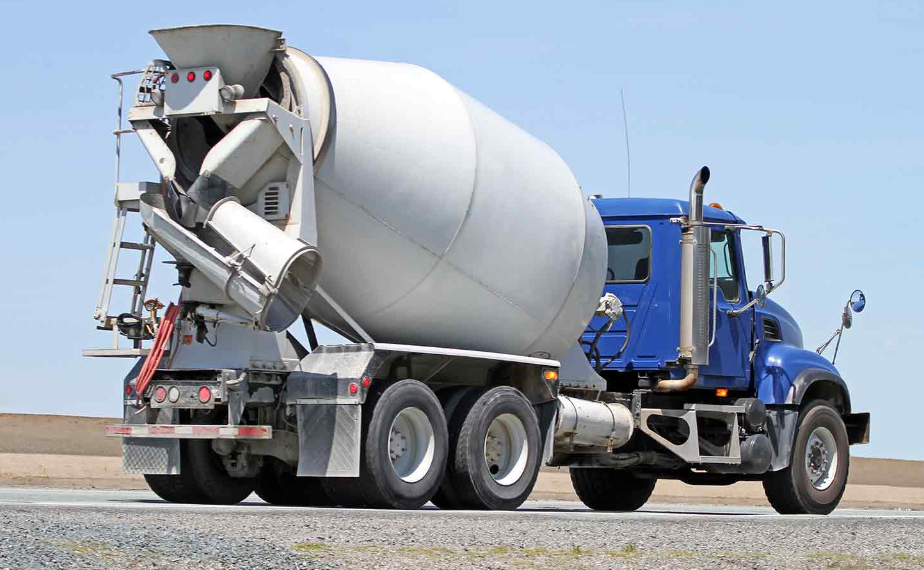
Concrete Truck Capacity Comparison Table
| Truck Type | Capacity (Yards per Load) | Typical Payload Limit | Weight Limits & Constraints | Common Uses |
| Small Concrete Trucks | 4–6 cubic yards | ~20,000–26,000 lbs | Lower truck payload limit best for narrow streets and on site yardage restrictions | Residential driveways, sidewalks, patios |
| Medium Concrete Trucks | 7–9 cubic yards | ~26,001–33,000 lbs | Balanced load per trip must follow truck load factor and capacity chart guidelines | Medium-size foundations, parking lots, slabs |
| Large Concrete Trucks | 10–12+ cubic yards | 33,000+ lbs | Must follow strict transport weight limits, capacity constraints, and state CDL rules | Highways, infrastructure, major commercial projects |
Concrete Truck Capacity Factors
The capacity aspect is far beyond just achieving a high capacity or batch size. Essentially, the design, the law, and operational limits are influencing factors.
Weight Restrictions
All trailers are tagged with concrete weight restrictions and cargo transport limits. The greater concerns are the truck payload limit and concrete truck weight, irrespective of the drum capacity. Overloading can lead to fines, road damage, and safety concerns.
Truck Size and Design
The design and shape of the vehicle usually determine the concrete truck capacity. To illustrate, a front-discharge mixer may have a higher lifting capacity than a rear-discharge mixer due to variation in the truck capacity chart. Manufacturer instructions always point to batch yield, standard load volume, and haul volume as best practices for safe operations.
Local Regulations
CDL rules and local regulations directly affect the planning of concrete truck deliveries. In some areas, they impose weight class limits, delivery windows, and on site yardage restrictions. Awareness of these jurisdiction differences ensures compliance and keeps the concrete truck scheduling process on track.
Calculating Concrete Requirements for Your Project
Good concrete project estimation helps contractors save cost and time.
Estimating Concrete Volume
Take the dimensions of the length, width, and depth for the pour area. Converting these into cubic yards gives the concrete volume estimation. To arrive at accurate yardage planning, the concrete contractor usually uses a capacity chart or truck capacity chart.
Determining Number of Truckloads
Divide the total cubic yards by the truck’s yards per load. For example, if a truck has a capacity of 8 cubic yards, the trips will be the total cubic yards divided by 8. Considerations such as round trip volume, truck load factor, and load planning can be used to fine-tune the concrete truck scheduling.
Planning for Extra Concrete
Always plan for 5–10% more to cover unexpected waste or uneven surfaces. This buffer is part of contractor quantity planning and yardage estimation. It ensures the batch yield won’t be insufficient, keeping the concrete delivery scheduling on track.
Choosing the Right Concrete Truck for Your Project
The correct option depends on project size, concrete supplier coordination, and proper scheduling.
Assessing Project Size and Scope
For small residential projects, a compact truck or even a non-CDL option may be sufficient. For larger slabs or infrastructure projects, high-capacity trucks are required. Smart concrete truck selection lowers costs and ensures effective truck load planning.
Coordinating with Concrete Suppliers
The best concrete supplier coordination ensures smooth concrete delivery. Before scheduling, confirm delivery payload, truck payload limits, and batch size guidance. A well-planned load delivery ensures trucks arrive within the concrete delivery window and comply with capacity constraints.
Scheduling Deliveries Efficiently
Accurate concrete truck scheduling is fundamental to a successful operation. Key parameters are on site yardage, delivery payload, and round trip volume. Coordinating multiple trucks fosters batch volume consistency, preventing downtime and cold joint issues. Careful truck scheduling respects delivery windows and project deadlines.
Final Thoughts
So, how many yards can a concrete truck hold? Small trucks carry 4–6 cubic yards, medium trucks 7–9 cubic yards, and large trucks 10–12 or more cubic yards. While cubic yard capacity provides a guideline, the real efficiency is determined by truck payload limits, concrete truck weight limits, and state CDL rules.
By applying precise yardage planning, accurate concrete project estimation, and solid concrete supplier coordination, contractors can respect material transport limits, optimize truck load factors, and deliver efficiently. Whether for a small driveway or a massive infrastructure pour, understanding truck capacity charts, batch yield, and delivery payloads ensures the right truck is chosen, the maximum truckload is used safely, and projects are completed smoothly.
About the Author