Beginning
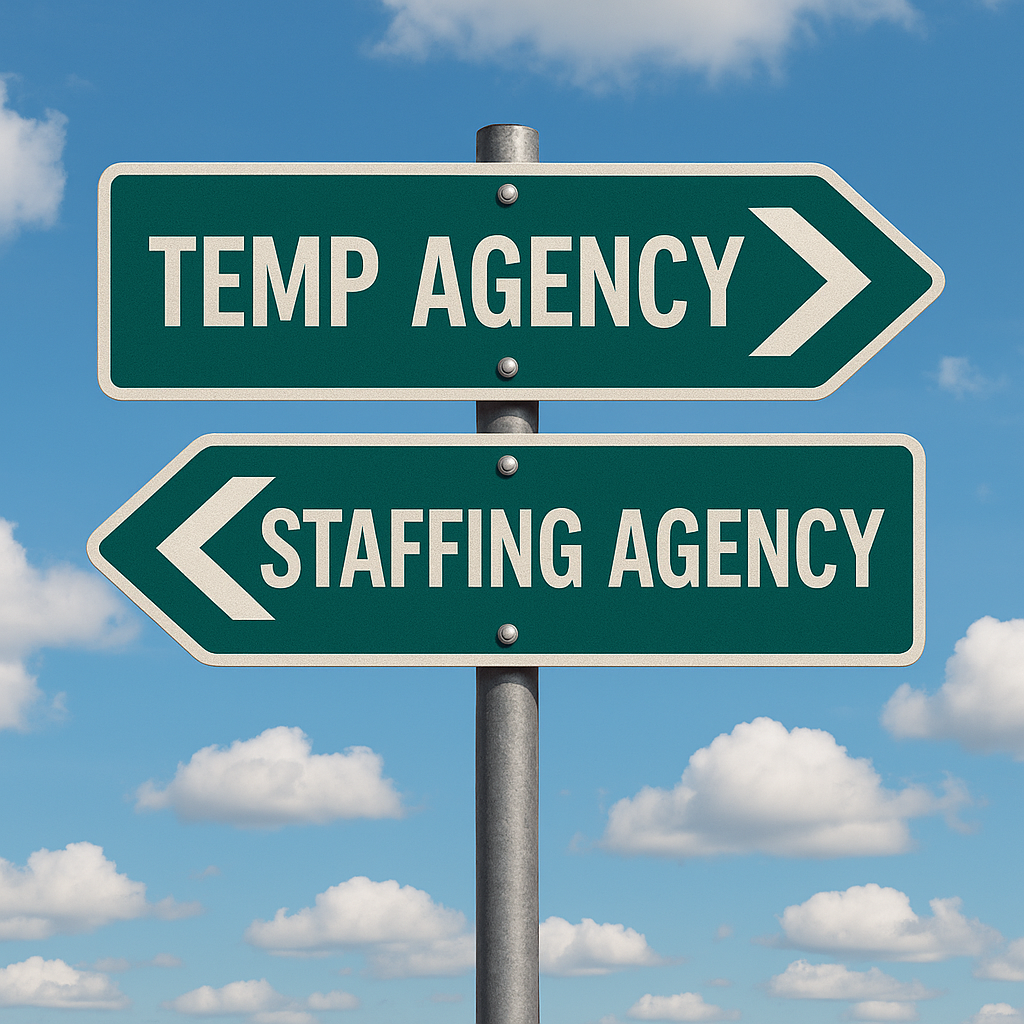
The current labor market is an arena for continuous battle, and the argument about the temp agency vs staffing agency examines more than ever. Employers undergo the transitions in their workforces, while applicants are looking for stability, growth, or quick job placement based on their objectives. The two can work together to address the gap between the companies that need workforces and the talented individuals, each of them needs to be hired by a company. However, they differ in the employment duration, focus, compensation, and the provision of long-term staffing services.
Companies in sectors that regularly experience changes in the staff size, for instance, truck driving, warehousing, healthcare, and IT, could realize the highest benefits from knowing these differences and therefore, improving their employee strategies and, subsequently, managing their workforce management more effectively. Together with the benefits of this knowledge, job seekers can also decide between temporary employment and long-term staffing that may have an impact on their salaries, career development, and overall job satisfaction.
Employment Duration
Temp Agencies
Temp agencies are organizations that deal with setups of the short-term staffing or transitional staffing period mode. Arranging is often used to deal with immediate hiring needs, for example, due to the seasonal shift in the freight movement, short term assignments in administration offices, or labor shortages that are a result of employee leaves.
For instance, a trucking company having an unexpected increase in freight volume can denounce a temp agency to adjust for a short period of time such as issuing up to five CDL drivers. This action lies in quickly adapting to the ever-changing market without entering into long duration assignments or permanent employment contracts.
The main features of the temp agency employment period are:
- Jobs can be either for one day or several months.
- Workers are often compared to contingent staffing and not normal employees.
- Assignment duration usually ends after the project or need is finished.
This model provides the opportunity to hire quickly and deploy the resources, but it could also, on the other hand, inhibit workers’ career progress and limit temp worker benefits.

Staffing Agencies
Retention, meanwhile, is the main point in staffing agencies that indeed this is the smiler aspect for the companies looking for long-term staffing commitments with a view to also boosting the productivity of potential employees. Unlike, temp to perm or direct hire service paths which they sell as their unique products, they are also supporting project based staffing or contract positions they, however, are more efficient in the long run targeting job retention as the major outcome.
In the cases, for instance, in logistics or truck driving, the staffing agency may find and screen the whole operator for multiyear contracts. This is a strategy that allows employers to focus effectively rather than ineffectively.
The key features that staffing agency adds to employment duration include:
- Jobs very often involve long duration assignments.
- Agencies are providing both direct hire and temp to perm, payrolling services.
- There is a strong focus on a sustainable workforce pipeline.
In this case, on the one hand, employers are the ones who want to tackle the problem of retention, while on the other hand, job seekers are the ones who want to develop a career and long-term job opportunities.
What is the Difference Between a Temp Agency And Staffing Company?
Focus and Approach
Temp Agencies
Temp agencies are all about quick placement. They hold a temp pool, that is a group of candidates who are available immediately for short-term staffing. The recruitment process is pretty simple—background checks & talent sourcing with skills testing are usually incorporated but the speed is prioritized mainly.
This hiring flexibility of temp agencies is what makes them the ideal choice for project based staffing, seasonal hiring, and industries with an unpredictable labor market demand. An example is a warehouse during holiday times when the situation changes and a temp agency is brought in to hire hundreds of temporary staffing .
By employing this method, employers get a chance to keep their workforce flexibility, while at the same time, job seekers are given diverse job opportunities and places to learn. Nonetheless, the issue of culture fit and development often do not have the same significance.
Staffing Agencies
On the other hand, staffing agencies have a far-reaching methodology for the whole process of recruitment. They are not just about the hiring process but also play the role of recruitment agencies, complete staffing solutions.
The steps in their processes are:
- Talent sourcing through job reporting, marketing networks, and other channels.
- Detailed candidate screening, and verification through background checks plus skills testing.
- Organization of the onboarding of personnel to allow for the smooth integration of the employees.
Staffing agencies are often embedded in the workforce solutions , which means they help employers develop hiring strategies, manage client services, provide onsite staffing, remote staffing, and sometimes staffing firms also include payroll outsourcing.
For the job seekers, the above turns into a lot of personalized job matching, career development support, and opportunities in direct hire jobs or temp to perm jobs.

Compensation and Benefits
Temp Agencies
Temp worker’s compensation is something that agencies generally decide on salary rates. This break has a non-endorsed way of thinking that workers need tools and to eat. The agencies are involved in a healthy salary exercise, but workers do not profit from funds set aside for their health and retirement plans.
The characteristics are:
- Deals with seasonal salary issues and no annual bonus payment.
- Temporary employees normally do not get employee benefits like healthcare or retirement planning.
- The wage for short term assignments may be competitive but the worker will most likely not be able to sustain this for long periods.
- Wage benchmarking is not common and thus some participants can get different rates in jobs.
For instance, a seasonal/temporary truck driver could make good hourly pay during a tight freight season but somewhat is left with no guarantee for a job once the market downturns. This lack of stability can be difficult for those who are focused on building a strong and secure financial position but is on the other hand a great opportunity for people looking for additional income and employment experience.
Staffing Agencies
Staffing agencies are more likely to give the best compensation packages. The main aspect of this is that the employees have benefits like:
- Health insurance and retirement funds.
- Holiday pay, sick leave, and paid time off policy.
- Programs for training and career development.
The companies that offer employee benefits in this way will enjoy better staff retention and the ability to attract better candidates if the workers feel this. The added-value perception is directly proportional to the labor market demand.
Moreover, staffing agencies use wage benchmarking that entails both ensuring that pay is competitive within the job market and also tracking the latest employment trends. It will definitely result in efficiencies in employers recruitment and enhance job seekers satisfaction levels.
Recruiting Agency vs Staffing Agency. What is the Difference?!

Pros and Cons
Temp Agencies
Pros:
- Fast-paced and good resource deployment planning are possible.
- The staffing is best for short-term staffing, transitional, seasonal, or fluctuating demand situations.
- Contingent workers gain exposure to diverse industries and employment agencies trends.
Cons:
- Decrease in employee benefits and fluctuating hours.
- Lower focus on direct hire alternatives or career development.
- Increased training and employee onboarding are higher for employers due to high turnover.
- Not suitable for long duration assignments requiring continuity.
Staffing Agencies
Pros:
- A large array of services such as direct hire, temp to perm, and contract staffing is offered.
- Intensive candidate selection and recruitment process is stressed.
- Provision for full compensation packages and better employee benefits.
- Strategic staffing services like workforce augmentation, client services, and vendor management.
- Stronger employer branding and workforce solutions.
Cons:
- The service process is slower than in temp-to-hire agencies.
- Higher initial investment.
- More rigorous pre-screening may cut short immediate opportunities.
- Less suited for urgent short term assignments.
Closing Insights
The choice between a temp agency vs staffing agency basically is based on the priorities of the organization. Temp agencies are ideal for short-term staffing, project based staffing, and rapid deployment. This tool helps manage uncertainties or test workforce solutions needs without long-term obligations.
Staffing agencies, in return, handle long-term staffing, temp to perm, and direct hire alternatives pathways. They emphasize stability, career growth, and comprehensive staffing solutions that cover everything from talent sourcing to payroll outsourcing.
Both models are significant for the transportation, logistics, truck, and related sectors. A logistics provider may rely on a temp-to-hire agency during seasonal spikes, while turning to staffing agencies for long duration assignments and permanent recruitment.
For job seekers, the choice reflects whether they want fast, flexible job opportunities or secure career paths with benefits. Balancing both sides helps employers and candidates align with the right type of agency, ensuring better outcomes in a competitive job market.
About the Author