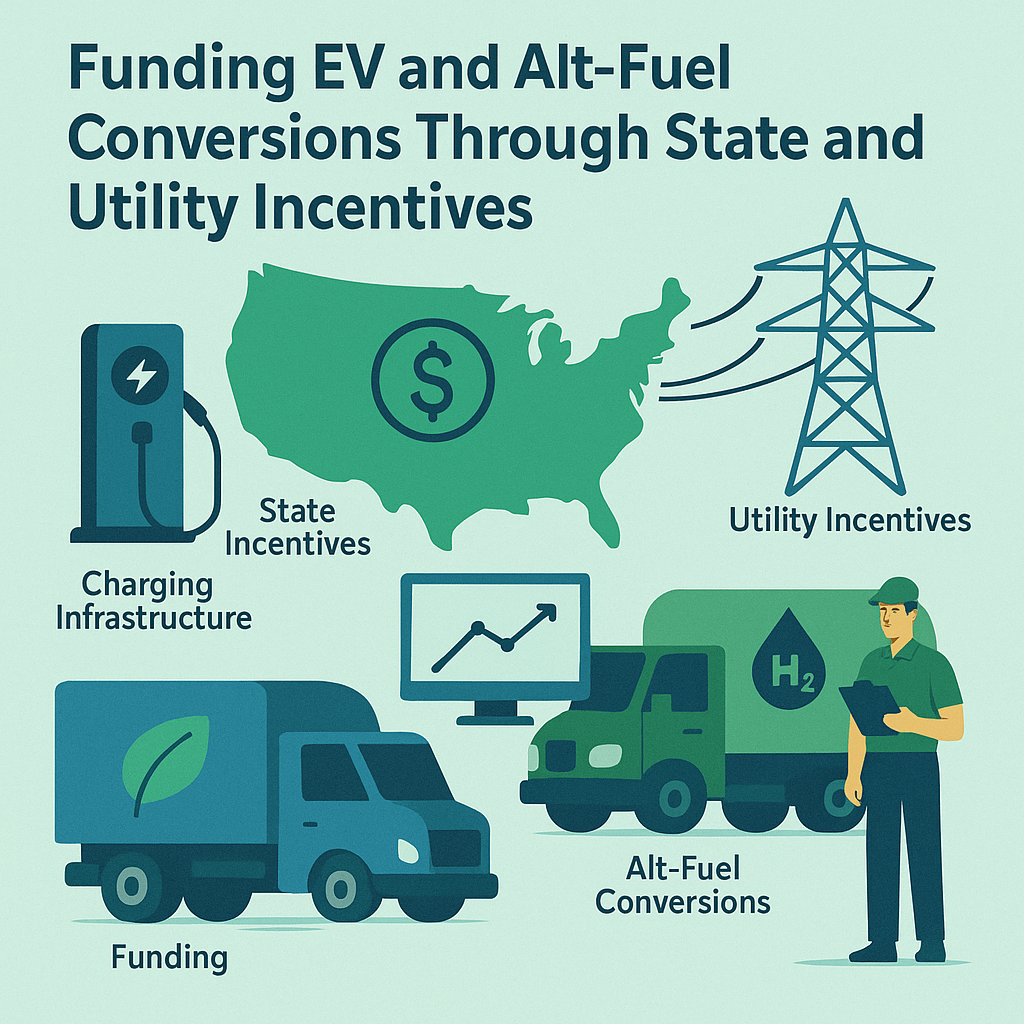
Due to the surge in the demand for clean energy, then too, transport with sustainability has more to it than emitting less, fleets have become more reliant on alternative exploration and on the electric vehicle conversions. Nevertheless, getting to electric vehicles, hydrogen, or renewable gas is never without cost. Here’s some good news: Lots of funding and state plus utility incentives have appeared to make your transition easier and reduce your initial costs. These programs, cashbacks, and infrastructure grants are really various ways to support the further fleet conversion and operation future-proofing.
Leadgamp is a company that is very much aware of the funding innovation’s significance. Being a forward-thinking transport company that is on green transitioning and long-term operational viability, we have been very active in searching for electric vehicle incentives and alt-fuel conversion programs in various states. This has enabled us to cut financial losses while achieving new standards on emissions with no impact on fleet size or performance.
This article will provide you with an overview of how to avail state and utility incentives for funding, so you can not only make your EV or alt-fuel conversion strategy possible but also cost-effective.
The Fundamental Role of Funding and Incentives for the Clean Fleet Conversion
The change to electric vehicles or alternative fuels in fact is not only changing the engine. It frequently involves:
- Vehicle replacement or retrofit
- Charging or fueling infrastructure
- Technician training
- Software and telematics upgrades
These improvements may be costly. But when the funding is right, such expenses can be cut down most of the time through local initiatives, utility programs, and national projects.
For example, California’s Hybrid and Zero-Emission Truck and Bus Voucher Incentive Project (HVIP) offers many thousands of dollars per vehicle. New York, Illinois, and Texas are among the states that also have specific programs, so state incentives are the first step in the journey to an affordable greenhouse gas-free energy source.
Utility incentives are also one of the major aspects. Many local power companies provide rebates for charging stations, grid interconnectivity, and Time of Use pricing which means your operational footprint is reduced.
Selecting the Best Programs for Your Fleet
Not all EV incentives or alt-fuel conversion programs come equal. Learning the different levels and stacking them correctly can be the one that is more than 10% discount or change.
Most Common Types of Funding:
1. Federal Grants and Loans
Fleets can apply for grants covering up to 100% of eligible vehicle or charging equipment costs. Those grants are as much as the Infrastructure Investment and Jobs Act or EPA’s Clean School Bus Program.
2. State-Level EV Incentives
Each state has its own unique bundle of funding instruments. Some noteworthy mentions are:
- California HVIP
- New York Truck Voucher Incentive Program
- Texas Natural Gas Vehicle Grant Program
- Colorado ALT Fuels Colorado
3. Utility Incentives and Partnerships
Utility incentives could be:
- Free or discounted EVSE (Electric Vehicle Supply Equipment)
- Demand-charge reduction programs
- Fleet electrification planning support
- Time-of-use billing for fleet charging
We are in collaboration with two utility providers who support us with the equipment rebates and grid-readiness funding which has given us the edge as part of the fleet is electrified.
How Alt-Fuel Conversions Become a Part of the Incentives
Although alt-fuel funding is not as widely discussed as that of electric vehicles, such fuels are as well eligible for several state and utility incentives.
Depending on your location and fuel type, alt-fuel conversions may be eligible for:
- Retrofit funding
- Fueling infrastructure rebates
- Vehicle purchase subsidies
- Ongoing tax incentives or credits
For instance, in Colorado, the ALT Fuels program provides funding for both natural gas and electric vehicle options. Similarly, several Midwest states offer propane fleet incentives through Clean Cities coalitions.
EV Infrastructure: The Hidden Cost That Incentives Can Cover
Charging infrastructure includes:
- Level 2 and DC fast chargers
- Site engineering and construction
- Electrical panel upgrades
- Software and grid integration
Examples of Incentives:
- NYPA’s EV Make-Ready Program – funds up to 90% of infrastructure costs
- Southern California Edison’s Charge Ready Transport – rebates for site upgrades
- Xcel Energy’s Fleet Electrification Advisory Program – planning support at no cost
Leadgamp recently utilized a make-ready program to equip two of our hubs with fast-charging depots. The utility handled the majority of grid upgrades — an expense that would otherwise total six figures.
Best Practices for Applying for EV and Alt-Fuel Funding
a) Build a Funding Calendar
Track submission windows to avoid missing out.
b) Stack Incentives Strategically
Use:
- Federal funds for vehicles
- State funds for infrastructure
- Utility rebates for installation
c) Partner with Your OEM and Utility
OEMs and utilities often assist in grant and site support.
d) Document Your Sustainability Goals
Show your mission with data and metrics — agencies prefer aligned applicants.

Measuring the ROI of Funded Conversions
| Benefit | Typical ROI Impact |
| Upfront rebates | Save 30–80% of vehicle cost |
| Fuel cost reduction | Up to 50% savings vs. diesel |
| Maintenance cost savings | 30–60% savings on parts/labor |
| Tax credits and deductions | Lower taxable income or credits |
| Emissions compliance | Avoid fines or future regulation costs |
Leadgamp has already seen a reduction in operating expenses across two pilot EV hubs, one alt-fuel retrofit program which omitted 40% of maintenance callouts.
Future Trends in EV and Alt-Fuel Incentives
Looking ahead, expect:
- Greater emphasis on hydrogen and Renewable Natural Gas (RNG)
- Direct support for small carriers
- Performance-based incentives tied to emissions
- Utility-supported electrification planning
Stay informed via Clean Cities updates, local DOTs, and sustainability consultants.

Final Thoughts: Seize the Funding Window While It’s Open
Fleet transformation is no longer optional — it’s happening. But for those who move early, the opportunity to convert with support from funding, state incentives, and utility incentives is enormous.
At Leadgamp, we view clean energy as a strategic priority and a competitive advantage. Leaning into EV incentives, alt-fuel conversions, and cooperating with energy partners, we are building a smarter, cleaner fleet — while driving cost and compliance optimization.
If you are looking for a way to participate in energy transition by switching to electric vehicles or alternative fuels, now is the time. The funding windows are open, the programs are waiting, and the tools to navigate them are in your hands.
About the Author